Wednesday, May 09, 2012

Ethiopia: Exciting Innovations in Agriculture and Health (By Bill Gates)


May 08, 2012

by Bill Gates

I’ve made many trips to Africa, but my recent visit to Ethiopia was definitely one of the most exciting. With effective governance and coordinated support from our foundation and other donors, the advances I saw in health and agriculture may be the key to unleashing Ethiopia’s potential and that of other African countries.
Ethiopia is one of the poorest countries in the world and has faced enormous challenges feeding its people and providing critical health services to mothers and their children. Yet, I returned from a recent visit excited about advances the country is making in agriculture and health.

If these innovations—which are a top priority for our foundation—succeed, they can be replicated in other African countries that also face big challenges in health and agriculture.

One factor in Ethiopia’s progress is Prime Minister Meles Zenawi and his leadership team, who have played a key role in reinventing the country’s agricultural and health systems. Making changes to either would be a big challenge in any country, so it’s even more impressive in Ethiopia, which has the second largest population of any country in Africa but a limited economic infrastructure.

Around 85 percent of the country’s population survives by growing crops on small plots of less than five acres. But frequent droughts and soils that have been depleted of nutrients often led to low crop yields and considerable food insecurity. More than half of the country’s population of 83 million is malnourished and more than 5 million households receive food aid each year.

Our foundation has been working with the Ministry of Agriculture, the county’s new Agricultural Transformation Agency, and other partners to help farmers plant higher-yielding, drought-tolerant seeds, improve soil health and fertility, and get higher prices for their crops by selling to global markets.

At the Melkassa Research Station, one of 13 government-run agricultural outposts, Dr. Markus Walsh, Sr. showed me a new, state-of-the-art technology called NIR spectroscopy that’s part of a digital revolution in agriculture. This portable device, which quickly and cheaply analyzes soil conditions, is a fantastic breakthrough that will help farmers everywhere. But it’s especially valuable in countries like Ethiopia, where farmers haven’t been able to afford laboratory tests but need to know how to amend soils to grow better crops. The spectroscopy is part of an even bigger agricultural digital information system that will provide a comprehensive and detailed map of soil properties across the country.

I also met with a number of farmers to talk about new varieties of sorghum (a grain) and beans they are growing. Beans are very important because they provide protein and people need a combination of protein and grain to have a reasonable diet.

Helping small farmers sell their crops in world markets is another important part of the work we’re supporting in Ethiopia. It’s currently a big challenge because poor farmers may not be growing the right crops for world markets and they often lack the roads, trucks, and other infrastructure necessary to enable exports. And getting foreign investors to help build this “value chain” can be difficult. But I visited one agricultural processing facility called ACOS, that is processing and shipping a variety of beans to European markets. It is jointly owned by an Italian company and Ethiopian investors and is a great example of private investment in developing countries.

What Ethiopia is doing in health is really a model system because it reaches everyone in the country. I visited the Germana Gale Health Post, where I talked to several of the more than 30,000 health extension workers who have been trained in recent years to deliver basic health education, prevention, and treatment. Most of the health workers are women, and those I met were energetic and well-trained.

These kinds of primary health services—giving vaccines, educating women about family health, and promoting hygiene and environmental sanitation—is the foundation for building good health systems in poor countries. Ethiopia’s health system also includes district health centers like the Dalocha Health Center I visited. There, they do a little bit of surgery and have more expertise and a wider variety of drugs. There are also primary hospitals that focus on higher level treatment and some emergency surgery, and general hospitals that deal with serious emergencies and high-risk and specialized care.

Ethiopia still faces some big problems. But the people I met and what I saw re-energized me and increased my optimism that the big investments we and other donors are making in health and agriculture will pay off for the people of Ethiopia and can serve as model activities in other African countries. Improving agricultural productivity and the quality of life through better health services is the key to unleashing the potential of Ethiopia and other poor countries and getting them on the road to self-sufficiency.

Monday, May 07, 2012

Pre-Historic Ethiopia 3.2 million years old


The history of Ethiopia begins with Lucy. Lucy was a female hominoid that lived in what is now called the Awash Valley in Hadar some 3.2 million years ago. When her skeletons were discovered in 1974, Ethiopia then claimed that it was the first dwelling of mankind. But recent finds in Kenya, such as the discovery of Kenyanthropus platyops in 1998,

Brazil Goes to Africa


Opinion, by Aklilu Shiketa

RIO DE JANEIRO, BRAZIL – May 7, 2012 Foreign Minister of Brazil, Mr. Antonio Patriota, recently disclosed that Brazil today has more embassies in Africa than the United Kingdom. Only between 2003 and 2010, Brazil opened seventeen new embassies in Africa. President Dilma Rousseff visited three African countries already. She has established Africa Working Group to help strengthen the Brazil and Africa cooperation.

Addis Ababa to Host World Economic Forum & Ethiopia Investment Summit


Ethiopia's capital is gearing up to host The World Economic Forum's meeting on Africa and the 2012 Ethiopia Investment Summit this week. (

May 7, 2012

New York (TADIAS) – The Lion Economies – a term coined by the global management consulting firm McKinsey & Company two-years-ago to describe the seven out of ten fastest economies currently located in Africa – is also the slogan being used to promote the 2012 “Ethiopia Investment Summit” that is scheduled to take place at the United Nations Economic Commission for Africa (UNECA) building in Addis Ababa this week. The event is timed to coincide with the World Economic Forum’s meeting on Africa set to commence at the Sheraton Addis on Wednesday.

“The medium to longer-term goal is to change the image of Ethiopia from Live Aid to an emerging African frontier market,” says Henok Assefa, an investment and finance adviser based in Addis Ababa, whose firm Precise Consult International is organizing the UNECA conference. “In the short run, we hope to initiate profitable and job creating opportunities for investors and for the country.”

But does not reinventing Ethiopia’s image abroad, begin at home, where it remains mostly a one-party-rule, and locked in chronic-poverty, corruption, embezzlement, and the muzzling of journalists?

“I’m not saying this to support the Government’s position,” Henok said. He points to a report by The Economist magazine published in December 2011 entitled The Hopeful Continent: Africa Rising, which gave a positive economic assessment for several African countries, including Ethiopia. “For me, whether you take the Ethiopian Government’s 11% growth numbers or you look at those alternatively suggested by the IMF at around 8%, you’re still talking about incredible growth in this country,” he said. “In fact, Ethiopia is expected to be the best performer, with The Economist Intelligence Unit forecasting the country to be the fastest growing in Africa and the third fastest in the world for the period 2011-2015.”

According to Henok, the UNECA conference will serve as a platform for foreign investors to explore Ethiopia as an investment destination. “It is designed to create a network and partnership between local CEOs and foreign CEOs and policymakers against the background of a discussion about investment opportunities and challenges in Ethiopia,” he said.

Returning to lack of political space, transparency and free-press? What is the impact on safe-investment? “I wholeheartedly believe that in this day and age, there is only one direction and that is free market and democracy,” Henok continued. “There will undoubtedly be many ups and downs in the process, which may frustrate many people.”

“We think Ethiopia offers immense opportunities in agro-processing for instance,” he said. “Food production is a major challenge at a global level these days with the earth struggling to support up to 9 billion people soon.”

How about the contentious issue of large-scale farm acquisitions by outside companies and individuals, which human rights organizations say causes various negative impacts on local communities and the environment? “The land grab issue does not worry me and should not worry investors,” said Henok, who attended Fordham University in New York and worked for the Brooklyn Chamber of Commerce for more than four years before he moved back to Ethiopia to set up his consulting office a few years back. “I’m not sure how it is in other African countries but I’m confident that Ethiopia will be a winner when it comes to agricultural.” He added: “In fact, the potential for increased food production, tax revenues, foreign currency earnings, business opportunities for small business in upstream and downstream agro-industries, and finally employment up and down the chain could amount to billions of dollars within just a few years. For me, the alternative of sitting there and staring at this golden land for another 1000 years is clearly not an option. The NGOs who are making noise will get paid for doing so. Unfortunately, we can’t feed our people on NGO noise. Despite all the challenges, Ethiopia is an incredibly safe and stable country.”

Addis Ababa, Ethiopia's capital, is set to host the 22nd World Economic Forum, which attracted 700 leaders from business, government, civil society, a

May 7, 2012-(New Business Ethiopia)Addis Ababa, Ethiopia's capital, is set to host the 22nd World Economic Forum, which attracted 700 leaders from business, government, civil society, academia, media and the arts from over 70 countries.  The meeting, which will take place from 9 to 11 is hosted for the first time in Addis Ababa with the support of the Government of Ethiopia, according to the press statement the organizers distributed to the media.

Hub of Africa Fashion Week: Ethiopia & Tanzania Top ‘Origin Africa’ Showcase


Hub of Africa Fashion Week took place at the African Union conference center in Addis Ababa last week. (Courtesy photos)

Saturday, May 5, 2012

New York (TADIAS) – Ethiopian designer Mafi and Tanzania’s Doreen Mashika have won the Origin Africa designers showcase at The 2012 Hub of Africa Fashion Week held in Addis Ababa last week. The Ethiopian designer will be heading to New York to participate at The Africa Fashion Week New York in July.

The event this year was part the “Origin Africa” expo – an annual gathering organized by The African Cotton and Textile Industries Federation (ACTIF). The fashion show was sponsored by USAID East Africa’s Trade Expansion program. The list of participating countries included Ghana, Nigeria, Ethiopia, Angola, Mozambique, Zimbabwe, Ivory Coast, Gambia, Kenya, Tanzania, Uganda, The Democratic Republic of Congo, and South Africa.

An Annual Touring Extravaganza of Passport DC, Celebrated At the Ethiopian Embassy.


By Tsehaye Debalkew , May, 5, 2012, Washington DC/--

A-day-long annual event dubbed "Passport DC, Around the World Embassy Tour" highlighting Ethiopian cultural and social extravaganza which attracted more than five thousand residents of the Washington Metropolitan hub was colorfully held in the premises of the Chancery of the Ethiopian Embassy in Washington Dc. today, May 5, 2012.

Friday, May 04, 2012

Ethiopia’s Victory Day to be celebrated by local Rastafarian group


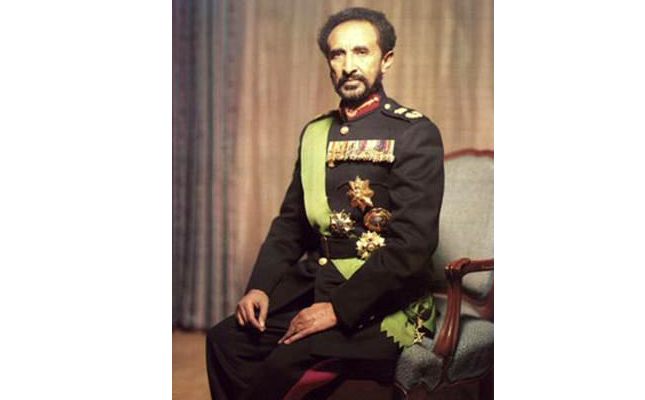
Ethiopian Head of State during the Second Italian Invasion, Haile Selassie


Friday 4 May, 2012 at 2:22 PM


By: Suelika N. Creque, SKNVibes.com
NEWS SPONSORED BY: TDC Group of Companies Ltd ( Tel: 869-465-2511 )
BASSETERRE, St. Kitts – THE Tewoladi House of David in collaboration with the Trinity Trod Youth Alliance will be hosting a celebration in commemoration of Ethiopia’s Victory Day on Sunday, May 6 at the Railway Bar, Old Road.


According to a member of the Tewoladi House of David, the Victory Day marks the day when Ethiopia defeated Italy on May 5, 1941.


It is the day when Ethiopian Emperor Haile Selassie I was said to have returned from exile with Gideon forces, and his army with the help of British soldiers was able to free Ethiopia from the Italian army that had occupied the country for five years.


In 1935, Benito Mussolini the 40th Prime Minister of Italy and also founder of Fascism, invaded Ethiopia with the blessings of the then Pope.


“Here you have the Pope blessing Italy to invade a Christian nation. It was a Christian nation invading a Christian nation, so one of them had to be the Anti-Christ. And from the Bible we read that the Pope and the fascist army, Mussolini and Hitler, were the Anti-Christ at that time and Haile Selassie, at that time reigning on the throne of David, was representing God.


“Representing the people and representing God, not for Ethiopia but the whole world. Ethiopia was the only nation that was not enslaved by another nation; it was the only nation that has been free since man was created on earth,” he said.


The event will comprise of a fun/sports day for the children, an agri-market where fresh produce will be on sale and a cultural show.


Some of the performers include Ras Sankofa, Fire man Ashkenaz, Ras Khalid, Elder Ira and Masud Sadiki and the Limitless Band.


The event will begin at 3:00 p.m. and end 9:00 p.m. and will be free of cost.


President Obama invites PM Meles of Ethiopia to G8 meeting


May 4, 2012

U.S. President Barack Obama has invited the leaders of Ethiopia, Ghana, Tanzania and Benin to attend the Group of Eight summit of major economies later this month in the United States.
White House spokesman Jay Carney says Ethiopian Prime Minister Meles Zenawi, Ghana's President John Mills, Tanzanian President Jakaya Kikwete and Benin President Yayi Boni, who is the current chairman of the African Union, will attend the summit for a discussion of food security on May 19 at the U.S. president's mountain retreat –

Gambella land has not been sold, but psychologically been negatively disturbed for no good reasons

By Duach R

May 4, 2012

Ethiopia, one of Africa's poorest countries, is heralding great strides in eradicating poverty. The number of Ethiopians living in poverty has dropped below one-third of the total, despite population growth and soaring inflation.

Gambella land is not for sale yet! For thousand years, Nuer, Anyuak, and other Gambella ethnic groups have lived in villages not in towns. Two to three years ago, Ethiopia government came up with a very interesting program call "Villagization or mender."

Thursday, May 03, 2012

Ethiopian Aviation Academy Graduates Trainees


Thursday, 03 May 2012

The Aviation Academy of Ethiopian Airlines, Ethiopia’s flag carrier, graduated 20 pilots and 22 Aviation Maintenance Technicians at a ceremony held at the airline headquarters on the 30th of April.The graduating pilots completed more than 695 hours of classroom and Multi-Engine aircraft training which included 60 hours of in flight training devices. The graduates have also qualified the ICAO level-1 English proficiency requirement as part of their training.

Ethiopian Third Party Insurance Coverage to Include Temporary Licenses Plates

Thursday, 03 May 2012

Compulsory Third Party Insurance Coverage in Ethiopia is to include vehicles with temporary and daily vehicle license plates who had avoided the insurance so far.The letter requiring all vehicles seeking temporary and daily license plates to get compulsory third party insurance coverage was issued in the beginning of April by the Federal Transport Authority to regional branch offices.

Wednesday, May 02, 2012

Brazilian Firm Signs Agreement with Ethiopian Railway

Wednesday, 02 May 2012

Andrade Gutierrez S.A, a Brazilian firm signed a Memorandum of Understanding with Ethiopia’s Railway Corporation. The Brazilian Company is expected to work on the 496km Addis Ababa-Ijaji-Jimma-Bedelle Railway Project to be financed by funds from Brazilian financial institutions according to Ambassador Taye Atskeselassie, Director General for the Americas with the Ministry of Foreign Affairs.

Turkish & Swiss Companies to Supply Chemicals to Ethiopia

Wednesday, 02 May 2012 |

Rose Chemicals, from Turkey and Swiss companies, CHT-Bazema and Textile Color AG, have been selected for an exclusive arrangement to supply chemicals to the textile industry in Ethiopia with a commitment to set up factories in the next five years. The Textile Industry Development Institute and the Ministry of Industry invited 15 international companies to make offers following persistent complaint from the textile sector about challenges associated with chemical imports.

Volunteer or Engineering profs wanted for Ethiopia


01 May 2012

Could you volunteer your engineering expertise to help others?
The international development charity VSO has launched its first recruitment drive for engineering professors to enter a volunteering programme in Ethiopia.
Brian Rockliffe OBE, director of VSO UK and a former educationalist, said: “With cut backs and job losses affecting the UK’s higher education workforce, we’re urging professionals in this sector to seriously consider taking an exciting, career enhancing and possibly life-changing break."

Tuesday, May 01, 2012

Duke football players on a mission, in Ethiopia


By JACK DALY
Correspondent of Charlotteobserver
Posted: Monday, Apr. 30, 2012
Dave Harding spent his first summer in Ethiopia when he was 11 years old.
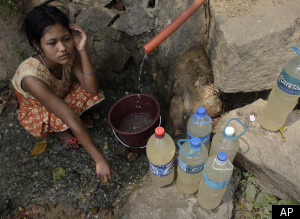
The grandson of missionaries and the son of an agricultural engineer who sits on the board of a nonprofit that provides water sources to impoverished Ethiopian communities, the Duke offensive lineman helped construct wells in a country where international organizations estimate 76 percent of the population does not have easy access to clean water.

I gave up my birthday for charity: water


May 1, 2012
by Brook Hammerlimg Huffingtonpost.com

When I stepped off the plane in Tigray, northern Ethiopia -- a region bordered by Somalia and Eritrea -- I truly did not know what to expect. Many of my generation vividly remember the pictures of starving children with distended bellies and we have the word FAMINE burned into our brains as a result. We ate every Brussels sprout and string bean during that time as our mothers reminded us of the suffering these children were experiencing. The name Ethiopia itself takes us to a land far far away and in truth, it is. So when I arrived with a small group of people brought together by Scott and Viktoria Harrison of charity: water,

Thursday, April 26, 2012

Ethiopia: Nation Can Become New East African Hegemon

BY JOSH MAIYO, 20 APRIL 2012

Salva Kiir Mayardit, president of the Republic of South Sudan (Photo Courtesy USAID)
Recent news that the Republic of Somalia and newly independent South Sudan have applied to join the East African Community (EAC) has elicited uncharacteristically heated debate on the hitherto rather sedate and lacklustre dialogue on the region's economic and political integration process.

Wednesday, April 25, 2012

Dubai Company Partners with Ethiopia’s Access Real Estate

Soliton Holding Ltd, a Dubai-based company signed partnership agreement with Access Real Estate, an Ethiopian share company, agreeing to invest 2 billion birr in the coming few years. Managers of the two companies signing the agreement at the

Sheraton Addis April 24, 2012 - Photo- newbusinessethiopia.com

Monday, March 05, 2012

East Africa: Kenya, Ethiopia to Sign Special Trade Pact

3/4/2012 Nairobi — Kenya and Ethiopia have agreed to enter into a special status trade arrangement that will eliminate the barriers faced by their respective business communities and increase trade between them.

Ethiopia's Prime Minister Meles Zenawi who was on a visit to Kenya said that the bilateral trade pact would address the specific challenges that hinder the growth of trade between the two states.

"We need a pact that addresses specific Kenyan and Ethiopian issues. We are not worried about the pact favouring either country. We are open to ideas on how to develop trade between the two countries," the premier said.

Ethiopian can not afford a prolonged war.

Ethiopian can not afford a prolonged war. Ethiopia as the poorest country in the world is dependent on aid. A prolonged war simply depletes ...